

Water is the lifeblood of our planet. It flows through rivers, seeps into the soil, and evaporates into the air, sustaining every living thing. But beyond simply quenching our thirst, water — and its continuous movement through the environment — plays a critical, often overlooked role in feeding the world. This process, known as the water cycle, is the hidden backbone of global agriculture.
Understanding how the water cycle supports food production is essential as the world faces climate change, water shortages, and growing food demands. Let’s break down how this powerful natural system works and why protecting it is key to our future.
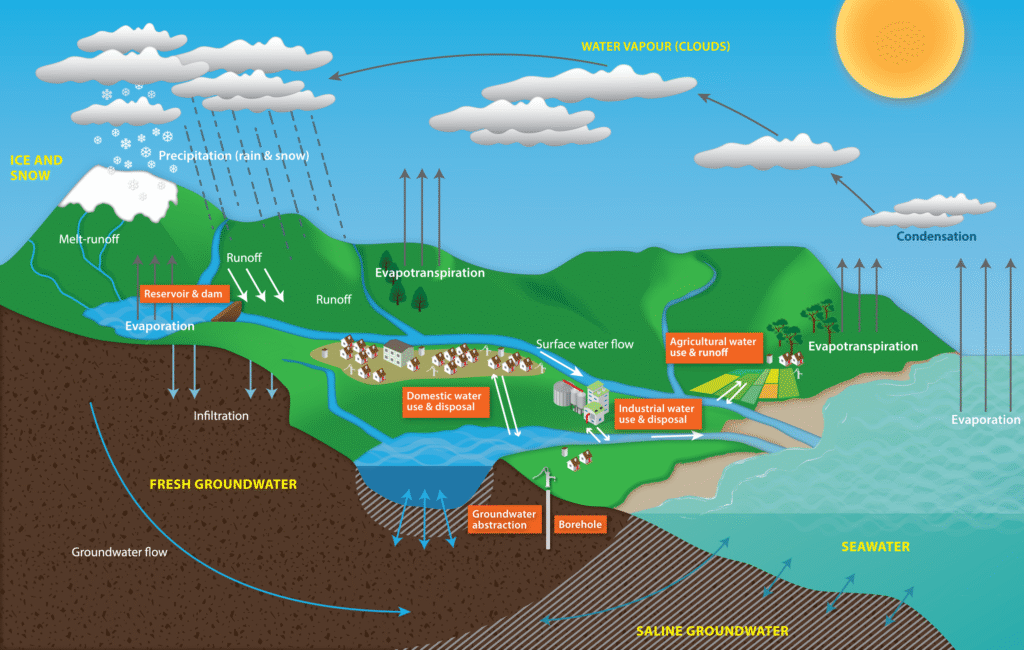
The water cycle, also called the hydrological cycle, describes how water moves between the land, oceans, and atmosphere. This cycle has four main stages:
This never-ending cycle maintains the planet’s water supply and regulates weather patterns, which farmers heavily depend upon.
Without the water cycle, agriculture as we know it could not exist. Here’s how each step of the water cycle directly supports farming:
Thanks to this natural water recycling system, farmers do not need to rely entirely on artificial water supplies, keeping food production sustainable and affordable.
In recent decades, human activities have begun to disrupt the water cycle. Climate change, deforestation, and pollution are creating severe imbalances in this delicate system. For example:
Experts warn that if we do not protect the natural water cycle, food security worldwide will be at risk.
Farmers around the world are already experiencing the consequences of a disrupted water cycle. In sub-Saharan Africa, shifting rainfall seasons have made it harder for small-scale farmers to plan their planting and harvesting. Meanwhile, regions of India and China have suffered both floods and water scarcity within the same year, destroying harvests and threatening local economies.
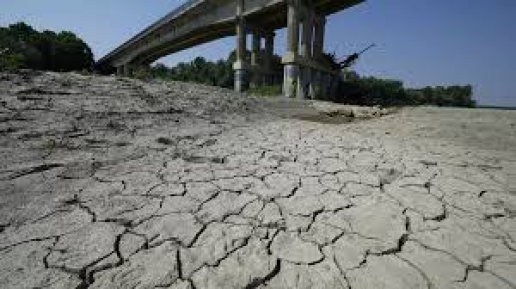
In California, one of the world’s largest fruit and vegetable producers, prolonged droughts are forcing growers to dig deeper and deeper for groundwater, which is not sustainable long-term. If underground water levels are not recharged naturally through infiltration and rainfall, future harvests could collapse.
Protecting the water cycle is essential to safeguard global agriculture. Here are some strategies experts recommend:
Global cooperation is also needed, as weather patterns do not respect national borders. Countries must work together to share data, invest in climate resilience, and support farmers with education and resources.
It’s easy to think of food as something that simply appears on supermarket shelves. But every grain of rice, every loaf of bread, and every piece of fruit depends on a stable, predictable water cycle. As climate change and pollution threaten that stability, all of us — not just farmers — have a stake in protecting this vital system.
If the water cycle is broken, global food production could face catastrophic disruptions. That means higher prices, shortages, and potential conflicts over scarce water resources. Protecting the water cycle is not just about farming — it is about feeding a growing global population in a fair and sustainable way.
The water cycle is an ancient and powerful system that keeps our planet in balance. It supports every harvest, every farm, and every person on Earth. By respecting and protecting this natural cycle, we are investing in our shared future.
As the world grows warmer and the population increases, we must act to protect the water cycle before it is too late. Farmers, scientists, policymakers, and everyday people all have a role to play.
After all, water connects us all — and the water cycle will continue to decide whether humanity thrives or struggles in the years to come.
Read More:- Shobha Realty Launches Its Most Luxurious Project Yet—Full Details Inside 2025