The water cycle, or hydrological cycle, is one of nature’s most powerful systems, quietly working behind the scenes to keep life on Earth thriving. From forests and grasslands to rivers, wetlands, and oceans, the water cycle supports an incredible variety of plants and animals. Without it, much of our planet’s biodiversity — the rich variety of living things — would not survive.
Let’s explore how this natural cycle of evaporation, condensation, precipitation, and infiltration helps support life and maintain a healthy, balanced ecosystem.
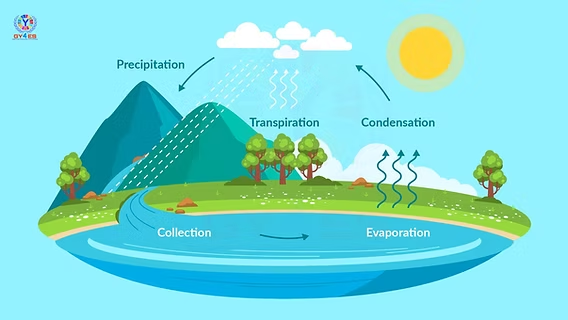
The water cycle is a continuous process where water moves between the land, oceans, and the atmosphere. It begins with evaporation, where water from oceans, lakes, and rivers turns into water vapor due to the sun’s heat. Transpiration also adds water vapor from plants.
This vapor then cools and changes back into tiny water droplets, forming clouds through condensation. When these droplets become heavy enough, they fall back to Earth as precipitation — rain, snow, sleet, or hail. Some of this water soaks into the ground (infiltration) and replenishes underground aquifers, while the rest flows over land into rivers and streams (runoff), eventually returning to the sea.
This endless cycling of water is vital for keeping the planet’s climate stable and for supporting all living things.
Freshwater provided by rainfall is essential for plants to grow. Plants, in turn, feed herbivores like deer and rabbits, which then support carnivores like wolves and eagles. In this way, water indirectly sustains entire food chains.
In tropical rainforests, for example, high rainfall means lush plant growth that supports millions of animal species, from tiny insects to powerful jaguars. Similarly, in grasslands, seasonal rains encourage the growth of grasses, attracting grazing animals like zebras and antelope, which support predators such as lions.
If rainfall patterns are disrupted — for example, due to climate change — these food chains can collapse, putting entire species at risk.
One of the greatest gifts of the water cycle is the creation and maintenance of wetlands. Wetlands, such as marshes, swamps, and mangroves, rely on regular flooding from rivers and rainfall.
These unique areas are some of the most productive ecosystems on Earth. They act as nurseries for fish, amphibians, and reptiles. Birds migrate to wetlands to breed, and even large mammals like hippos depend on wetland habitats.
The water cycle keeps these wetlands alive, ensuring that they continue to filter pollutants, store carbon, and provide food and shelter for countless species.
Rivers are the veins of the land, carrying freshwater to plants, animals, and people. The water cycle refills rivers with rain and melting snow, which is essential for fish species like salmon that swim upstream to breed.
When river flows are healthy, they bring nutrients downstream, feeding floodplain forests and maintaining rich farmland. River systems also connect many habitats, allowing animals to move and migrate safely.
Without steady water supplies from rainfall and snowmelt, rivers can dry up, and entire ecosystems may collapse.
Another way the water cycle supports biodiversity is by regulating temperature. Through evaporation, water removes heat from the environment, helping cool the air. Rainfall can break droughts and lower extreme temperatures.
Clouds formed during the water cycle can also provide shade and help balance local temperatures, which is especially important for sensitive species that cannot handle temperature extremes.
This climate moderation protects coral reefs, tropical rainforests, and other biodiversity hotspots from becoming too warm or dry to survive.
Not all water ends up in rivers or lakes. Some seeps into the ground, filling aquifers that supply wells and springs. This groundwater is critical in dry seasons, providing water for plants and animals when surface water disappears.
In deserts, groundwater supports oases, which are vital watering holes for wildlife. In forests, tree roots tap into underground water sources, allowing them to survive seasonal droughts and support animals year-round.
If the water cycle is disturbed, aquifers may not recharge properly, leading to water shortages for plants, animals, and humans alike.
Unfortunately, the water cycle is under threat from human activity. Climate change, deforestation, and pollution are disrupting rainfall patterns, drying out wetlands, and causing floods in some places while creating droughts in others.
When the water cycle breaks down, biodiversity suffers. Plants fail to grow, animals go thirsty, and entire ecosystems can collapse. Protecting forests, restoring wetlands, and reducing carbon emissions are critical actions to help keep the water cycle stable.
Healthy biodiversity benefits everyone. It helps keep the air clean, soil fertile, and ecosystems resilient against disease. Pollinators like bees, birds, and bats — all reliant on water — help food crops grow.
The water cycle ties all of this together. It keeps nature functioning smoothly, protecting the web of life we depend on every single day.
The water cycle might seem like a simple process, but it is a lifeline for our planet’s incredible biodiversity. From the smallest insect to the largest whale, every creature relies on the continuous movement of water.
By understanding and protecting the water cycle, we are also protecting ourselves. A balanced, healthy water cycle means a healthy Earth, filled with diverse and amazing forms of life.
Read More:- Deyaar’s Latest Announcement Shakes Up the UAE Property Market