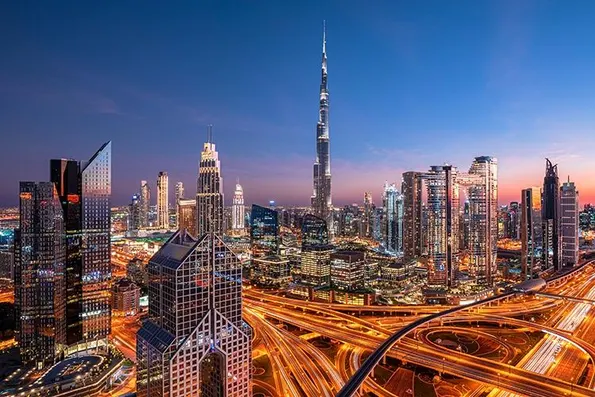
Dubai has never waited for the future to arrive. It builds it, regulates it, and scales it faster than most global cities. The rise of crypto-backed real estate in the UAE is another example of this mindset. While many countries still debate whether blockchain belongs in property transactions, Dubai has already created a regulated framework that allows digital assets and real estate to coexist with transparency, security, and confidence.
At its core, crypto-backed real estate is about simplifying ownership, increasing liquidity, and opening property investment to a broader audience. Dubai has positioned itself as the global testing ground where innovation is allowed to grow under supervision, rather than in legal grey zones. This balance between ambition and regulation is what sets the UAE apart.
The digital property market refers to real estate transactions and ownership models that use blockchain technology, tokenisation, and crypto assets as part of the buying, selling, or financing process. Instead of relying solely on traditional intermediaries, digital systems record ownership, payments, and transfers in a secure, verifiable way.
In the UAE, this does not mean unregulated crypto speculation tied loosely to property. It means structured systems approved by regulators where digital assets support real-world property transactions. This clarity has made the market attractive to serious investors rather than short-term risk takers.
Crypto-backed real estate allows buyers to use approved digital assets or tokenised structures to invest in property. In some cases, properties are divided into digital tokens, enabling fractional ownership. In others, crypto assets act as collateral or payment mechanisms within a regulated framework.
The real difference lies in efficiency and access. Transactions can be faster, records more transparent, and entry points lower for investors who previously found prime real estate inaccessible.
Technology alone does not build trust. Regulation does. Dubai’s leadership understood early that without strong oversight, digital property models would struggle to gain credibility. This is why every step of the crypto-backed real estate ecosystem operates under defined legal and financial guidelines.
This approach protects buyers, developers, and platforms, ensuring that innovation strengthens the market rather than destabilising it.

Dubai did not become a leader by accident. The city’s regulators, developers, and technology partners worked together to create a framework that encourages innovation without compromising stability.
The Dubai Land Department and other authorities have played a key role in integrating blockchain into land registration, title deeds, and transaction verification. This groundwork made the transition to crypto-backed models far smoother than in markets starting from scratch.
One of Dubai’s strongest advantages is clarity. Investors know what is allowed, how assets are treated, and which platforms are approved. This reduces uncertainty and attracts long-term capital rather than speculative inflows.
Clear rules also mean disputes are easier to resolve, ownership rights are protected, and compliance is built into the system from the start.
Dubai’s digital property market is not driven only by startups. Established developers, financial institutions, and government-backed entities are actively involved. This institutional participation sends a strong signal that crypto-backed real estate is not a fringe experiment but a serious evolution of the property sector.
When large players adopt new models, the ecosystem matures faster and attracts global attention.
Tokenisation is one of the most transformative aspects of the digital property market. It allows a physical asset, such as a residential or commercial property, to be represented by digital tokens on a blockchain.
Each token represents a share of the property’s value, rental income, or future appreciation. This model aligns well with Dubai’s investor-friendly environment.
Traditionally, prime real estate required significant capital. Tokenisation changes this by allowing investors to own a fraction of a property rather than the entire asset. This lowers entry barriers and enables portfolio diversification across multiple properties and locations.
For younger investors and international buyers, this model provides exposure to Dubai’s real estate market without the complexity of full ownership.
Every transaction involving tokenised property is recorded on a blockchain. This creates a transparent, tamper-resistant record of ownership and transfers. Buyers can verify their holdings instantly, reducing reliance on paperwork and manual verification.
This transparency also builds trust among investors who value clarity and accountability.
In Dubai’s regulated environment, crypto assets are integrated carefully into property transactions. They are not treated as anonymous or untraceable funds but as monitored financial instruments.
This distinction is critical for maintaining the integrity of the real estate market.
Approved crypto assets can be used as a means of payment for property purchases, subject to compliance checks. This appeals to global investors who hold digital assets and want to deploy them into tangible, income-generating investments.
The process is designed to be secure, with conversions and settlements handled through regulated channels.
Beyond payments, crypto assets can also be used as collateral for property-related investments. This creates new financing options and improves liquidity for investors who hold digital wealth.
Dubai’s framework ensures that such arrangements remain transparent and legally enforceable.
Dubai’s digital property market has captured global attention because it combines innovation with reliability. Many countries have either embraced crypto without safeguards or restricted it entirely. Dubai has chosen a middle path that encourages growth while managing risk.
This approach resonates with international investors seeking both opportunity and security.
For investors new to crypto-backed property, Dubai offers a relatively safe entry point. Strong governance, advanced infrastructure, and a pro-business environment reduce the learning curve and operational risks.
This makes the city attractive not just to crypto-native investors but also to traditional property buyers exploring digital options.
Dubai’s position as a global business hub enhances its appeal. Investors from Asia, Europe, and Africa see the city as a central point for managing diversified portfolios. Digital property models further strengthen this advantage by enabling remote participation.
Ownership no longer requires physical presence, yet remains anchored in a stable jurisdiction.
Crypto-backed real estate is not only reshaping investment but also influencing how developers design, market, and finance projects.
Forward-thinking developers are leveraging digital models to reach wider audiences and secure funding more efficiently.
Tokenised projects allow developers to raise capital in stages, selling digital shares to a global investor base. This reduces dependence on traditional financing and accelerates project timelines.
For developers, this means greater flexibility and access to diversified funding sources.
Projects that embrace digital ownership often attract tech-savvy and international buyers. This expands market reach and positions developers as innovators rather than followers.
In a competitive real estate landscape, differentiation matters.
Despite its progress, the digital property market faces challenges that must be addressed carefully. Education, cybersecurity, and market awareness are ongoing priorities.
Dubai’s regulators and industry leaders recognise that sustainable growth depends on responsible implementation.
Not all investors understand blockchain or crypto assets. Clear communication and education are essential to prevent misunderstandings and unrealistic expectations.
Dubai’s ecosystem increasingly focuses on transparency and investor awareness, ensuring participants know both the benefits and risks.
Digital systems must be protected against cyber threats. Continuous investment in security infrastructure is critical to maintaining confidence.
Dubai’s commitment to world-class digital governance helps mitigate these risks.
The UAE’s digital property market is still evolving, but its direction is clear. Dubai aims to become the global benchmark for regulated digital real estate.
Future developments are likely to include deeper integration with smart cities, advanced data analytics, and cross-border digital property platforms.
What feels innovative today may become standard tomorrow. As systems mature and adoption increases, crypto-backed real estate could become a regular option alongside traditional ownership models.
Dubai’s early leadership positions it to shape global standards rather than follow them.
The UAE’s success lies in its long-term vision. Instead of chasing trends, it builds ecosystems designed to last. Crypto-backed real estate is treated not as a novelty but as a structural evolution of property investment.
This mindset ensures resilience through market cycles.
Dubai’s leadership in regulated crypto-backed real estate investments reflects its broader ambition to redefine how assets are owned, traded, and valued. By combining innovation with oversight, the city has created a model that others are now studying closely.
For investors, developers, and policymakers, Dubai offers a glimpse into the future of real estate where digital efficiency meets real-world value. The UAE’s digital property market is not just about technology. It is about trust, access, and a smarter way to invest in one of the world’s most dynamic property landscapes.
Do Follow Estate Magazine on Instagram
Read More:- Why Paradise Lakes Tower B5 Is Ajman’s Hidden Real Estate Treasure