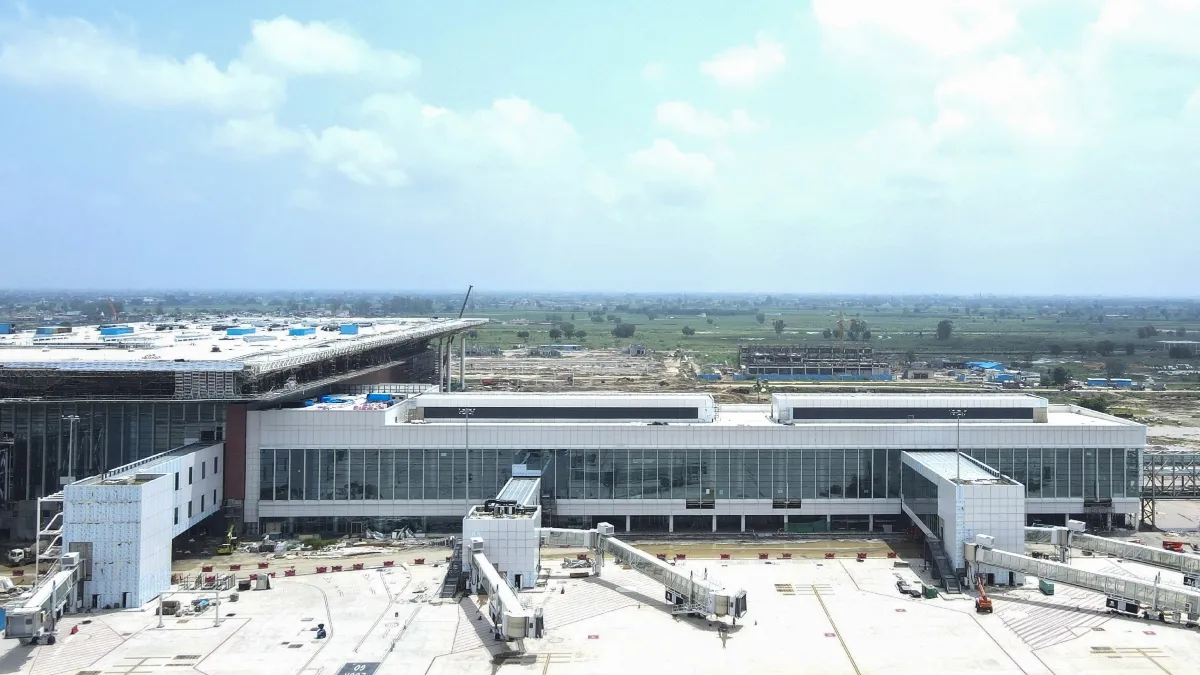
The construction of Jewar Airport, officially known as Noida International Airport, is fast emerging as one of India’s most ambitious infrastructure success stories. Slated for inauguration in January 2026, the project represents far more than a new aviation hub. It symbolises India’s push toward future-ready infrastructure, balanced regional growth, and global connectivity. As construction progresses steadily, Jewar Airport is shaping expectations across aviation, real estate, logistics, and employment markets.
Located in Uttar Pradesh’s Gautam Buddh Nagar district, Jewar Airport has been envisioned to ease congestion at Delhi’s Indira Gandhi International Airport while serving as a major gateway for North India. With its strategic location and massive scale, the airport is expected to become a catalyst for economic transformation across the National Capital Region and beyond.
Jewar Airport was conceptualised to address the long-term aviation needs of one of the world’s fastest-growing urban clusters. As air travel demand in India continues to rise, existing infrastructure faced mounting pressure. Jewar Airport emerged as a solution rooted in foresight, planning, and scale.
From land acquisition to design and execution, the project has navigated multiple challenges. Today, with major construction milestones achieved, the vision is becoming a tangible reality. The airport is designed to be developed in phases, allowing it to scale operations as passenger and cargo demand increases over time.
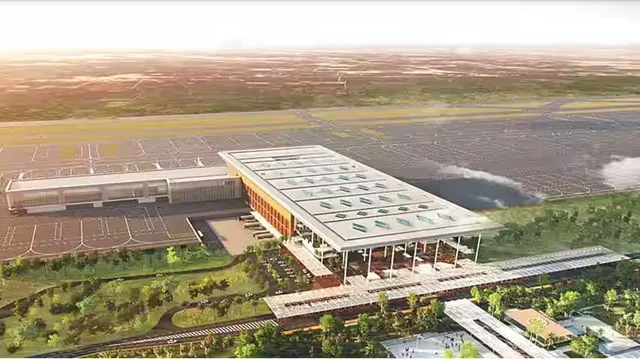
Construction work at Jewar Airport has advanced at a rapid pace, reflecting the urgency and importance attached to the project. Runway development, terminal structures, air traffic control facilities, and support infrastructure are progressing simultaneously to meet the January 2026 inauguration timeline.
The first phase includes a long runway capable of handling wide-body aircraft, positioning Jewar Airport as a future international aviation hub. Taxiways, aprons, and aircraft parking bays are being constructed with global operational standards in mind, ensuring efficiency and safety from day one.
Passenger terminals at Jewar Airport are being designed to balance functionality with comfort. Spacious layouts, natural lighting, intuitive navigation, and modern amenities aim to create a stress-free travel experience. The emphasis is on smooth passenger flow, reduced waiting times, and seamless integration of technology.
Jewar Airport is being developed with sustainability as a guiding principle. Energy-efficient systems, water conservation measures, and eco-friendly construction practices are integral to the project. The aim is to create an airport that meets global environmental benchmarks while supporting long-term operational efficiency.
The significance of Jewar Airport extends well beyond aviation. Its location makes it a powerful economic engine for western Uttar Pradesh, parts of Haryana, Rajasthan, and Madhya Pradesh. Improved air connectivity is expected to unlock opportunities across multiple sectors.
Jewar Airport is expected to become a major logistics and cargo hub, supporting India’s growing manufacturing and export ambitions. Proximity to industrial corridors and expressways makes it ideal for time-sensitive cargo movement.
With dedicated cargo facilities planned, the airport will support faster movement of goods, reduce logistics costs, and enhance supply chain efficiency. This is particularly important for sectors such as electronics, pharmaceuticals, perishables, and e-commerce.
Improved connectivity often acts as a magnet for global investors. Jewar Airport is expected to attract multinational companies looking to establish manufacturing units, warehouses, and regional headquarters in the surrounding areas.
One of the most visible impacts of Jewar Airport construction is unfolding in the real estate sector. Residential, commercial, and mixed-use developments are gaining momentum as developers and buyers anticipate long-term growth.
Improved connectivity, job creation, and infrastructure development are driving residential demand in areas surrounding Jewar. Affordable housing, plotted developments, and premium residential projects are all seeing renewed interest.
As businesses move closer to transport hubs, demand for office spaces, business parks, and retail centres is expected to grow. Jewar Airport is likely to anchor a new commercial ecosystem that complements existing NCR business districts.
The construction and future operation of Jewar Airport are expected to create thousands of direct and indirect jobs. From construction workers and engineers to airport staff, logistics professionals, and service providers, employment opportunities span multiple skill levels.
Once operational, the airport will require a large workforce for airlines, ground handling, security, retail, maintenance, and administration. This will open up long-term career paths for local communities and professionals from across the country.
Hotels, transportation services, food and beverage outlets, and maintenance services will flourish around the airport. These ancillary industries will further expand employment opportunities and stimulate local economies.
Jewar Airport is expected to significantly alter travel dynamics in North India. For many passengers, it will offer a more convenient alternative to existing airports, reducing travel time and congestion.
The airport’s design allows it to scale domestic operations while gradually expanding international connectivity. Over time, Jewar Airport is expected to handle long-haul international flights, strengthening India’s global aviation footprint.
Connectivity does not end at the runway. Jewar Airport is being integrated with major expressways and proposed rail links, ensuring smooth movement of passengers and cargo. This multimodal approach enhances accessibility and convenience.

Large infrastructure projects often generate ripple effects that extend far beyond their immediate footprint. Jewar Airport is no exception.
New townships, commercial hubs, and industrial zones are expected to emerge around the airport. This decentralised growth can help reduce pressure on existing urban centres while creating balanced regional development.
Improved connectivity encourages tourism, trade, and business travel. Cities and towns connected through Jewar Airport stand to benefit from increased economic activity and visibility.
While progress has been impressive, the journey toward inauguration is not without challenges. Coordinating large-scale construction, ensuring timely approvals, and maintaining quality standards require constant oversight.
Adhering to the January 2026 inauguration target demands disciplined project management. Balancing speed with safety and quality remains a top priority for all stakeholders involved.
Beyond construction, significant effort is required to prepare for operations. Staff training, system testing, and coordination with airlines and regulatory authorities will be crucial in the months leading up to inauguration.
Jewar Airport stands as a symbol of India’s confidence in its growth trajectory. It reflects a shift toward long-term planning, private-public collaboration, and infrastructure designed for future demand rather than current constraints.
As January 2026 approaches, anticipation around Jewar Airport continues to build. For travellers, it promises convenience and choice. For businesses, it offers opportunity and efficiency. For the region, it represents transformation and hope.
The construction of Jewar Airport is not just about building an airport. It is about building momentum, connectivity, and a future where infrastructure supports aspiration. When the first flight takes off from its runway, it will mark the beginning of a new chapter in India’s aviation and economic story.
Do Follow Estate Magazine on Instagram
Read More:- Dubai Metro Fuels Sustainable Property Growth for Future Buyers 2025