Dubai’s industrial sector has evolved from being a trade-driven economy to a global logistics and manufacturing hub. With its strategic location, modern infrastructure, and business-friendly environment, the city has become a magnet for industrial investors and businesses looking to expand operations in the Middle East.
Over the past decade, industrial leasing in Dubai has witnessed substantial growth due to the city’s focus on diversification, innovation, and logistics excellence. The demand is not just from local businesses but also from international companies seeking regional headquarters and distribution centers. This surge has turned industrial leasing into one of the most promising segments of Dubai’s real estate landscape.
Several factors make Dubai an attractive destination for industrial leasing. Firstly, its world-class infrastructure — including airports, ports, and logistics corridors — ensures smooth global connectivity. Jebel Ali Port, for example, is one of the largest and most efficient in the world, directly supporting industrial activities.
Secondly, the government’s initiatives to support manufacturing, e-commerce, and logistics under Dubai Industrial Strategy 2030 have strengthened investor confidence. With simplified licensing procedures, flexible lease terms, and zero income tax, the city provides an ecosystem that fosters business growth and long-term sustainability.
Lastly, Dubai’s emphasis on smart technology and sustainability gives it a competitive edge. Smart warehousing, automated facilities, and energy-efficient logistics zones make industrial operations more streamlined and cost-effective.
Dubai offers multiple high-performing industrial zones, each tailored to specific sectors and business needs. Below are the most sought-after areas for industrial leasing in the emirate.
JAFZA remains the heart of Dubai’s industrial ecosystem. Spanning over 57 square kilometers, it is strategically located near Jebel Ali Port and Al Maktoum International Airport, creating unmatched logistical advantages.
The zone hosts more than 8,000 companies from over 140 countries, operating in industries such as manufacturing, logistics, electronics, and automotive. Businesses leasing industrial spaces in JAFZA benefit from:
Due to its prime connectivity and established infrastructure, JAFZA consistently experiences high leasing demand and stable rental yields.
Dubai Industrial City is another powerhouse for manufacturing and logistics businesses. Located near Al Maktoum International Airport and the future Etihad Rail network, DIC provides unparalleled access to local and international markets.
The area caters to diverse sectors including food and beverage, machinery, chemicals, and transport. Tenants enjoy benefits like:
The strategic positioning of DIC makes it ideal for companies seeking scalability and efficient operations.
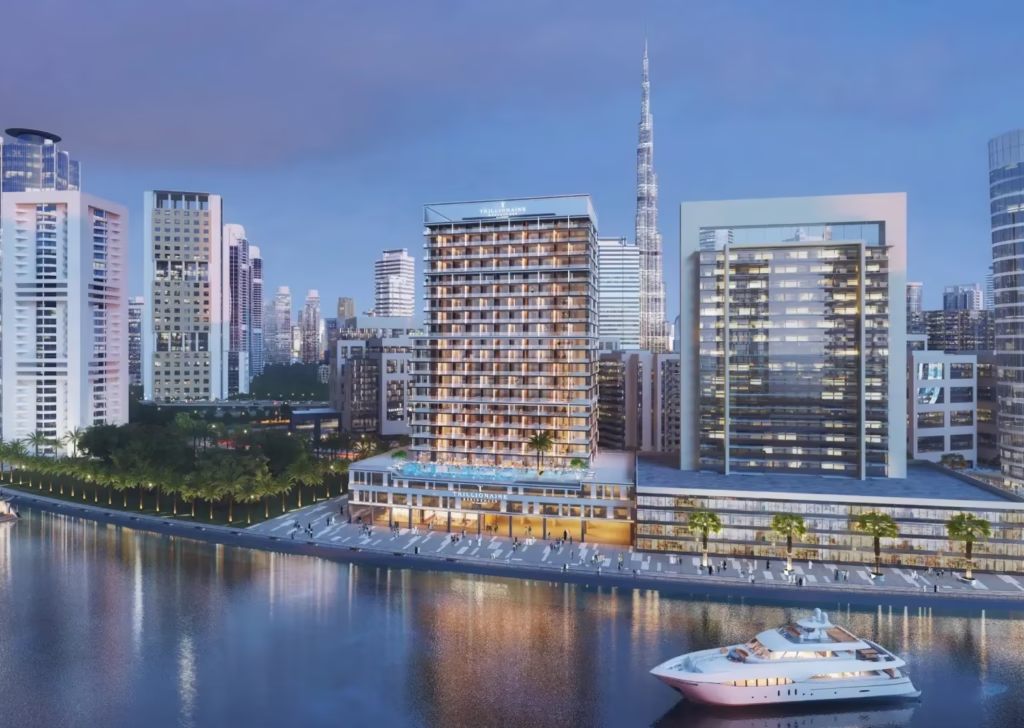
Dubai Investments Park offers a mixed-use environment that blends industrial, commercial, and residential components. This integration makes it particularly attractive for industrial tenants who value convenience and workforce accessibility.
DIP’s industrial area supports manufacturing, warehousing, and logistics companies. Key advantages include:
The community environment and infrastructure readiness make DIP one of the most practical choices for small to mid-sized businesses.
Dubai South is one of the most visionary developments in the emirate, designed as an integrated economic zone that supports aviation, logistics, and manufacturing industries.
Located near Al Maktoum International Airport, the zone provides direct access to global transport networks, making it a key player in the city’s future industrial landscape. Dubai South’s Logistics District and Industrial District are particularly popular due to:
For investors looking for long-term potential, Dubai South is a prime location expected to appreciate significantly as Dubai continues expanding its logistics capabilities.
Located in central Dubai, Al Quoz Industrial Area remains a top choice for businesses that need proximity to the city’s commercial districts. It is particularly favored by small manufacturers, automotive workshops, and storage providers.
While space is limited compared to newer industrial zones, its location advantage makes it one of the most in-demand areas for logistics and urban distribution companies. Tenants benefit from:
Due to its urban proximity, Al Quoz continues to attract consistent leasing demand, especially for last-mile delivery operations.
Ras Al Khor is another established industrial hub that caters mainly to automotive, construction, and light manufacturing sectors. Situated near Dubai Creek and key highways, it is ideal for businesses that require easy access to both old and new parts of the city.
Leasing in Ras Al Khor is popular for its:
This zone remains a strategic option for businesses looking to balance affordability with connectivity.
The demand for industrial spaces in Dubai continues to accelerate due to several macroeconomic and market-driven factors:
Rental rates across Dubai’s industrial zones vary based on location, infrastructure, and accessibility. Prime areas like JAFZA and Dubai South typically command higher rates due to superior facilities and connectivity, while zones such as Ras Al Khor and Al Quoz offer more affordable options for smaller enterprises.
The long-term investment outlook remains strong. With Dubai positioning itself as a global logistics and industrial hub, demand for industrial spaces is expected to rise steadily. Investors benefit from stable rental yields, long-term tenancy agreements, and growing capital appreciation.
Moreover, the city’s commitment to smart manufacturing and sustainable industrial growth ensures continuous modernization of facilities — a major factor in maintaining leasing demand and value appreciation.
Selecting the right industrial area depends on a company’s size, operational needs, and logistics requirements. Businesses should consider:
For example, logistics companies might prefer JAFZA or Dubai South, while small-scale manufacturers may find DIP or Ras Al Khor more cost-effective.
The future of Dubai’s industrial leasing market is bright. The government’s continuous investment in infrastructure, combined with technological innovation and sustainable development goals, ensures that the industrial sector will remain a key growth driver.
Upcoming initiatives like the integration of AI in logistics, green manufacturing zones, and the expansion of the Etihad Rail network are set to elevate Dubai’s industrial competitiveness even further. As more global and regional companies establish their bases here, leasing activity will continue to grow across all major zones.
Investors and tenants alike can expect increased opportunities, better facilities, and more flexible leasing structures in the coming years.
Dubai’s industrial leasing market represents one of the most promising and stable investment opportunities in the UAE. With world-class infrastructure, strategic connectivity, and an investor-friendly environment, the city continues to attract global businesses across diverse sectors.
High-demand areas such as JAFZA, Dubai South, DIC, DIP, Al Quoz, and Ras Al Khor stand out as top choices for companies seeking long-term growth and operational efficiency.
As Dubai strengthens its position as a global logistics and industrial hub, now is the ideal time for investors and businesses to secure their presence in the city’s industrial landscape — a landscape built on innovation, opportunity, and future-ready infrastructure.
Do Follow Estate Magazine on Instagram