When people think about landscaping, images of lush green lawns, colorful flower beds, and neatly trimmed hedges usually come to mind. But behind that beauty often lies heavy water use, chemical fertilizers, and gas-powered lawn tools that harm the environment. Today, more homeowners, businesses, and city planners are shifting toward eco-friendly landscaping an approach that blends beauty with sustainability.
Eco-friendly landscaping is not just a trend; it is a movement toward creating outdoor spaces that respect nature, save resources, and reduce long-term costs. From planting native species to harvesting rainwater, this approach is reshaping how we design and care for gardens, parks, and backyards.
Eco-friendly landscaping, also called sustainable landscaping or green landscaping, focuses on working with nature instead of against it. The idea is simple: design outdoor spaces that require fewer chemicals, less water, and minimal energy while still being attractive and functional.
Some key elements include:
By combining these practices, eco-friendly landscaping creates greener spaces that are healthier for both people and the planet.
Environmental challenges like climate change, rising temperatures, and water shortages make sustainable landscaping more important today than ever before.
According to the U.S. Environmental Protection Agency (EPA), landscaping practices account for nearly 30% of household water use. By making smart choices, homeowners can reduce their water bills while helping the environment.
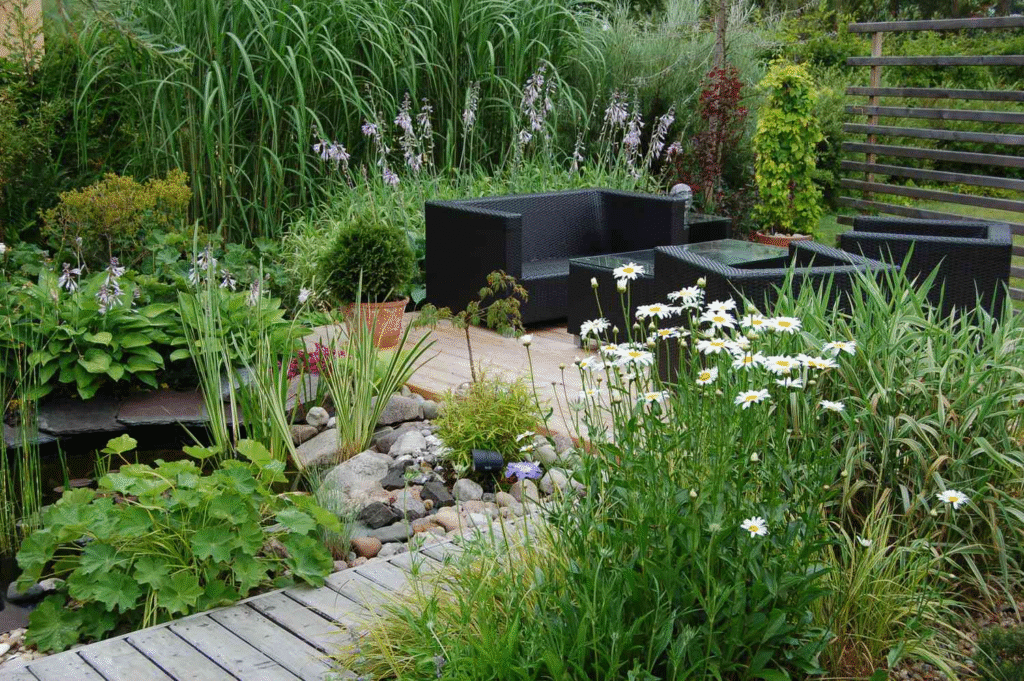
The good news is that eco-friendly landscaping does not mean giving up on a beautiful yard. In fact, it often results in more vibrant and diverse gardens. Here are some practical ideas:
Native plants are naturally adapted to the local climate and soil, which means they require less water, fertilizer, and attention. They also attract pollinators like bees, butterflies, and birds, supporting local ecosystems.
Lawns are water-hungry and maintenance-heavy. Replacing them with clover, moss, ornamental grasses, or low-maintenance ground covers can reduce water use and mowing needs.
Rain gardens collect and absorb rainwater from rooftops or driveways. They reduce flooding, recharge groundwater, and filter pollutants before they enter rivers and streams.
Composting kitchen and garden waste creates nutrient-rich soil that improves plant health. Mulching reduces water evaporation, controls weeds, and keeps soil temperature stable.
Switching from gas-powered lawn equipment to electric or manual versions lowers noise pollution and reduces carbon emissions. Battery-powered mowers and trimmers are becoming more affordable and efficient.
Using drip irrigation or smart sprinkler systems ensures water goes directly to plant roots instead of evaporating on the surface. This cuts waste and saves money.
Cities, businesses, and even schools are adopting sustainable landscaping as part of their green initiatives. Public parks are being redesigned with native plants, rooftop gardens are reducing heat in cities, and commercial buildings are using landscaping to improve energy efficiency.
In many regions, governments are offering rebates and incentives for homeowners who replace traditional lawns with water-wise landscapes. For example, cities in drought-prone areas like California and Arizona provide financial rewards for reducing turf grass and planting native species.
Landscape architects and garden designers are also playing a major role. Many professionals now specialize in eco-friendly design, helping clients achieve sustainability without sacrificing style.
Eco-friendly landscaping is not just good for the planet it benefits homeowners directly:
In fact, real estate experts note that properties with sustainable landscaping often sell faster because modern buyers value eco-conscious features.
Despite its advantages, eco-friendly landscaping faces some challenges. Many people believe sustainable yards are messy or less attractive than traditional ones. Others worry that switching to native plants may limit their design options.
Experts argue that these are misconceptions. With proper planning, eco-friendly landscapes can be just as elegant, colorful, and creative as traditional ones sometimes even more so. Professional designers often combine sustainability with modern aesthetics, creating unique and low-maintenance outdoor spaces.
As awareness grows, eco-friendly landscaping is likely to become the new standard for outdoor design. From suburban backyards to urban rooftops, sustainable practices are spreading rapidly.
The next generation of homeowners is expected to drive this trend further. Millennials and Gen Z, who prioritize sustainability in their lifestyle choices, are more open to replacing lawns with native gardens and investing in smart irrigation systems.
Technology will also play a role. Advances in sensors, irrigation apps, and eco-friendly building materials will make sustainable landscaping easier and more affordable.
Eco-friendly landscaping is proof that caring for the planet does not mean giving up on beauty. By making simple changes like planting native species, saving water, and avoiding chemicals—homeowners can enjoy stunning outdoor spaces while protecting the environment.
As cities grow and climate challenges increase, sustainable landscaping offers a way forward. It is not just a gardening trend it is a lifestyle choice that blends responsibility with creativity.
Whether you are redesigning your backyard or planning a new garden, choosing eco-friendly landscaping means choosing a future where outdoor beauty and environmental health go hand in hand.
READ MORE:- Shobha Realty Launches Its Most Luxurious Project Yet—Full Details Inside 2025