The water cycle, also called the hydrological cycle, is one of nature’s most powerful forces. It might seem like a simple process — water evaporates, forms clouds, and comes back as rain — but it actually plays a huge role in regulating Earth’s climate. From stabilizing temperatures to distributing rainfall, the water cycle helps keep our planet healthy and habitable.
In a world struggling with climate change, understanding how the water cycle influences our weather patterns and ecosystems is more important than ever. Let’s break down how this remarkable system works, why it matters, and what happens if it is disrupted.
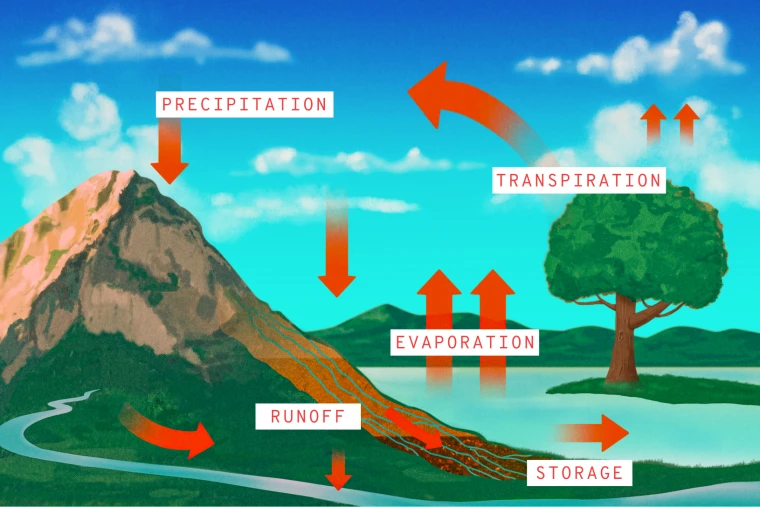
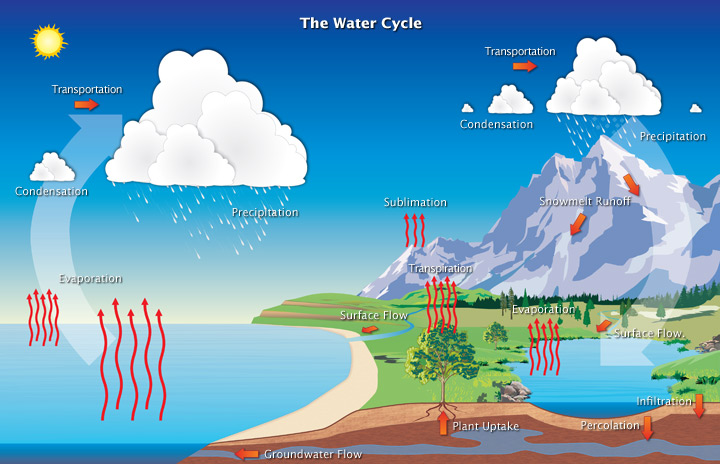
The water cycle is a continuous process in which water moves between the oceans, atmosphere, and land. The main steps are:
Evaporation – when water changes from liquid to vapor, usually from oceans, lakes, and rivers
Condensation – when water vapor cools and forms clouds
Precipitation – when water falls back to Earth as rain, snow, or hail
Infiltration and Runoff – water seeps into the ground or flows back into rivers and oceans
These steps repeat endlessly, moving enormous amounts of water around the planet. This cycle has been running for billions of years, and it is crucial for life on Earth.
One of the water cycle’s most important climate functions is temperature control. When water evaporates, it takes heat from the environment, creating a cooling effect. Think about how sweat cools your skin — the same idea works on a global scale.
Later, when the water vapor condenses to form clouds and rain, it releases stored heat back into the atmosphere. This exchange helps balance temperatures worldwide. In simple terms, the water cycle acts like Earth’s natural thermostat, keeping our climate from swinging to dangerous extremes.
Clouds are a key part of the water cycle and climate regulation. They do more than just bring rain — they reflect sunlight back into space, helping to cool the planet. At the same time, clouds can trap some heat close to Earth, preventing the planet from getting too cold at night.
This delicate balance of reflecting sunlight while also holding in heat makes clouds a vital climate regulator. Disruptions in cloud patterns, caused by human-driven climate change, can throw off this balance and lead to more extreme weather events.
The water cycle determines where and when rain falls, which affects ecosystems, crops, and freshwater supplies. Regular rainfall patterns help forests grow, rivers flow, and people get clean drinking water.
However, climate change is already disturbing the water cycle. Rising temperatures mean more evaporation, leading to heavier rain in some regions and extreme droughts in others. In places like Africa, Asia, and the American Southwest, this imbalance is creating severe water shortages, putting both humans and wildlife at risk.
The water cycle is closely connected to ocean currents, which move warm and cold water around the globe. These currents help distribute heat from the equator toward the poles, making sure no part of the planet gets too hot or too cold.
When more water evaporates from the ocean, it changes the salinity (salt content) of seawater. This, in turn, can alter ocean currents. Scientists worry that melting ice and increased rainfall from climate change could disrupt these currents, which might lead to unpredictable weather, stronger storms, and shifts in global temperatures.
While the water cycle is nature’s climate stabilizer, it is not immune to damage. Human activities like burning fossil fuels, clearing forests, and polluting water bodies add extra stress to this system.
Higher greenhouse gases warm the atmosphere, speeding up evaporation and intensifying storms. Floods become worse because warmer air holds more moisture, while dry places get even drier. In short, climate change throws the water cycle out of balance, creating dangerous feedback loops that can harm food production, water resources, and entire ecosystems.
Protecting the water cycle means protecting our climate. We can do this by:
Reducing carbon emissions to limit global warming
Restoring forests, which act as natural water cycle regulators
Conserving wetlands, rivers, and lakes that store and filter water
Investing in clean water infrastructure
If we work to keep the water cycle healthy, it will continue to protect us by cooling the planet, bringing reliable rain, and stabilizing weather patterns.
Understanding the water cycle’s role in regulating climate is essential for everyone, from students to policymakers. As climate change worsens, this ancient and delicate cycle will face even greater stress. That is why it is critical to act now, reducing greenhouse gases and protecting natural ecosystems that support the water cycle.
Every drop of water is part of a larger system that keeps our climate in balance. If we care for that system, it will continue to care for us.
Read More:- Shobha Realty Launches Its Most Luxurious Project Yet—Full Details Inside 2025