In today’s competitive real estate market, one factor continues to stand out as the ultimate game-changer—location. For commercial investors and business owners alike, proximity to metro lines has become more than just a convenience; it’s a strategic advantage that drives value, accessibility, and profitability. As urban cities evolve, the demand for office spaces near metro lines has skyrocketed, creating a niche market with impressive returns on investment (ROI).
From multinational corporations to growing startups, everyone is now prioritizing connectivity. Being near a metro line doesn’t just make commuting easier—it reshapes the way businesses attract talent, retain clients, and manage operations efficiently.
Metro lines have transformed urban mobility, reducing travel time and promoting sustainable commuting. This improved accessibility has turned metro-connected areas into bustling commercial hubs, where the potential for growth is enormous.
Investors are seeing steady rental appreciation and higher occupancy rates in properties located near metro stations. Employees prefer offices that allow them to skip traffic congestion, while clients appreciate easy accessibility. For landlords and investors, this means consistent demand, higher rents, and long-term tenant stability.
The presence of a metro station adds immediate value to surrounding properties. Studies have shown that commercial properties within 500 meters of a metro station tend to appreciate faster than those farther away, simply because of the unmatched convenience they offer.
Return on investment is the ultimate measure of success in real estate. Office spaces near metro lines often outperform traditional commercial properties in several key areas:
These advantages make metro-connected office spaces a safe and smart investment option. The consistency of returns is especially appealing to investors looking for stability in uncertain economic times.

One of the most underrated benefits of metro proximity is its impact on employees. Offices located near metro stations naturally attract more talent. Long commutes are a major factor in employee dissatisfaction and attrition. By choosing a workspace near a metro line, companies can reduce travel fatigue and improve work-life balance for their teams.
Convenience translates into higher morale, better punctuality, and improved focus—all of which directly affect productivity. Furthermore, businesses that prioritize accessible locations often find themselves aligned with modern sustainability goals, as metro commuting significantly reduces carbon emissions compared to private vehicles.
Cities around the world are embracing the concept of Transit-Oriented Development (TOD)—a planning strategy that integrates commercial, residential, and recreational spaces around public transport networks. Metro connectivity serves as the backbone of this model.
In regions following the TOD approach, developers are strategically building office complexes and co-working hubs near metro lines. This integration fosters vibrant, walkable neighborhoods that appeal to both professionals and investors. The result is a well-connected ecosystem that enhances property values and economic activity simultaneously.
Across major cities like Dubai, Singapore, London, and Hong Kong, metro access has become synonymous with premium office space.
In every case, the pattern remains clear—proximity to metro lines directly correlates with profitability and sustained demand.
While location is crucial, not all metro-adjacent offices guarantee high ROI. Savvy investors analyze multiple aspects before finalizing a purchase or lease:
By combining these factors with smart financial planning, investors can maximize their returns while minimizing risk.
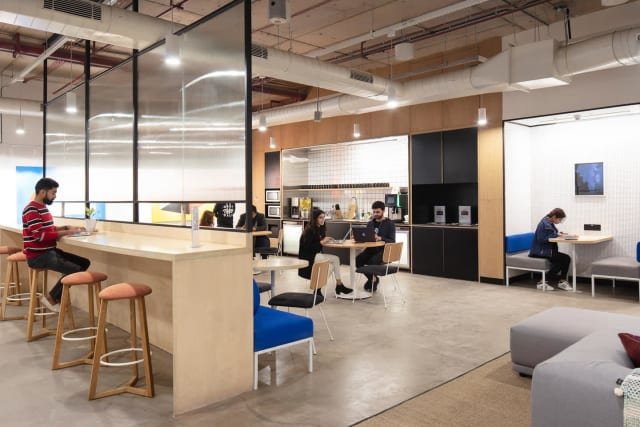
Another rising trend is the growth of flexible and co-working office spaces near metro stations. Businesses—especially startups and SMEs—prefer short-term leases and ready-to-move setups that provide convenience and mobility.
Operators of such spaces have realized the importance of connectivity. Most co-working giants now choose metro-connected locations as their top priority. This shift reflects a broader movement toward urban accessibility, digital innovation, and cost efficiency.
These modern spaces offer investors an additional advantage—diversified tenant pools and faster leasing cycles. As hybrid work models continue to evolve, metro-connected co-working environments will only grow in demand.
Sustainability has become a central theme in corporate real estate decisions. Office spaces near metro lines contribute to green commuting practices by encouraging public transport over personal cars. This helps reduce traffic congestion and air pollution—factors that modern companies consider when choosing office locations.
Many international organizations now include sustainability metrics in their operational strategies. A well-connected office aligns with their environmental goals and supports ESG (Environmental, Social, and Governance) compliance. This adds another layer of value, both ethically and financially.
The introduction of new metro lines often acts as a catalyst for regional transformation. Previously overlooked neighborhoods become thriving commercial districts once metro access is introduced. Investors who identify such opportunities early tend to enjoy exponential growth in property value.
Governments and developers often collaborate to ensure seamless integration of commercial and transport infrastructure. As a result, newly developed metro corridors become magnets for businesses, hospitality, and retail sectors—all reinforcing each other’s growth.
Let’s break down the difference in ROI between metro-connected and non-connected office spaces:
| Criteria | Metro-Connected Offices | Non-Connected Offices |
|---|---|---|
| Accessibility | Excellent; walkable | Moderate; depends on traffic |
| Rental Yield | 8–12% average | 5–7% average |
| Occupancy Rate | High year-round | Moderate with seasonal vacancies |
| Employee Commute | Easy, time-efficient | Long and unpredictable |
| Property Appreciation | Faster growth | Slower due to limited demand |
This comparison highlights why office spaces near metro lines consistently outperform others. The tangible benefits outweigh the slightly higher acquisition costs, making them a strategic long-term investment.
As cities expand and traffic congestion worsens, the importance of metro connectivity will only increase. Urban planning authorities continue to extend metro networks, linking more business districts than ever before. Investors who act now can secure prime spots before prices soar further.
In the next decade, experts predict that office spaces near metro corridors will remain among the top-performing commercial assets. Their resilience, high liquidity, and steady income potential make them ideal for portfolios seeking balanced growth.
Moreover, with the global shift toward sustainable cities, investors who align their decisions with public transit infrastructure will find themselves at the forefront of the next urban boom.
In commercial real estate, timing and location are everything. Office spaces near metro lines combine both—immediate convenience and long-term profitability. Whether you’re an investor looking for reliable returns or a business aiming for operational excellence, metro-connected offices offer the perfect blend of accessibility, growth, and prestige.
As cities continue to grow vertically and expand horizontally, the metro remains the heartbeat of urban connectivity. Investing near that heartbeat ensures your asset doesn’t just stay relevant—it thrives.
Do Follow Estate Magazine on Instagram
High-ROI Office Spaces Near Dubai Free Zones: Complete ROI Guide