Across the world, industries are undergoing a remarkable transformation. What was once defined by concrete walls, high emissions, and massive energy consumption is now being reshaped by sustainability. Industrial units are no longer just centers of production—they’re evolving into eco-conscious spaces that balance profitability with environmental responsibility.
This shift is driven by a mix of regulatory pressures, cost-saving opportunities, and a growing corporate commitment to climate goals. Sustainable industrial units are designed to minimize waste, maximize efficiency, and reduce carbon footprints—all while enhancing productivity and long-term profitability.
A sustainable industrial unit integrates energy-efficient design, renewable resources, and circular economy principles. It focuses not only on how materials are used but also on how operations affect the surrounding environment.
Key elements include:
Each of these components contributes to an industrial ecosystem that supports sustainability without compromising operational excellence.
Energy is the lifeblood of any industrial operation. However, it’s also one of the biggest contributors to environmental degradation. Sustainable industrial units tackle this challenge through intelligent design and renewable energy sources.
Many facilities now incorporate solar rooftops, wind turbines, and geothermal systems. LED lighting, motion sensors, and automated HVAC systems further cut unnecessary power usage. Energy monitoring software provides real-time data, allowing facility managers to adjust systems instantly for maximum efficiency.
The result? Lower operational costs and reduced carbon emissions—a win for both business and the planet.
Industrial operations often require vast amounts of water for cooling, cleaning, or production. Sustainable units are rethinking how water is sourced, used, and recycled.
Rainwater harvesting systems store natural precipitation for later use, while wastewater treatment plants allow water to be reused within the same facility. Smart irrigation and leak detection systems help reduce waste in landscaping or maintenance.
This not only minimizes strain on local water resources but also shields businesses from future water scarcity risks—a growing global concern.
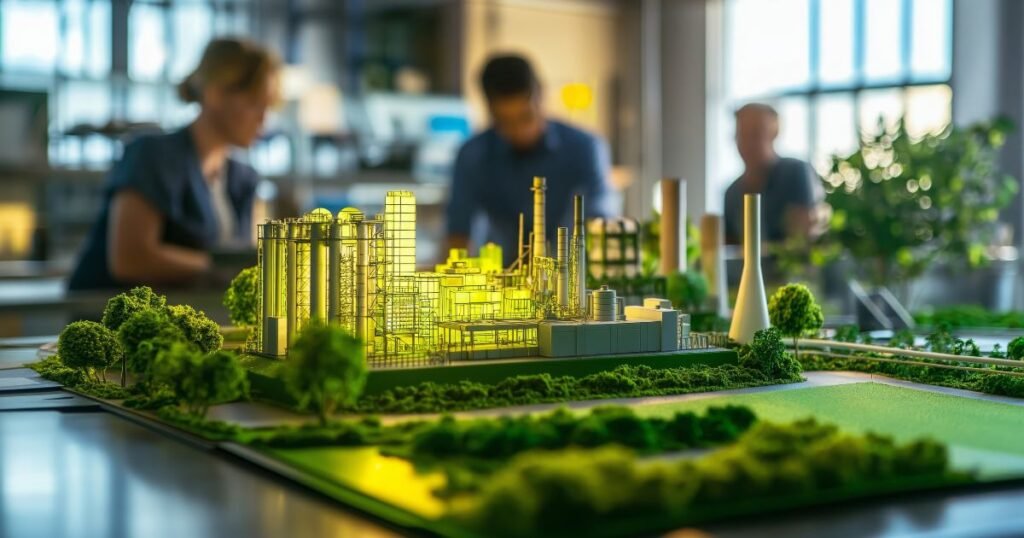
The foundation of sustainability starts with construction. From the moment a building is designed, choices made about materials and layout can influence its long-term environmental impact.
Eco-friendly materials such as recycled steel, low-VOC paints, bamboo, and reclaimed wood are becoming standard in modern industrial architecture. Green insulation materials, like cellulose or sheep wool, replace synthetic alternatives to enhance thermal performance.
Moreover, modular construction techniques are gaining popularity, allowing faster builds with less waste and energy use. The emphasis is not just on constructing a space but creating one that harmonizes with nature and lasts for decades with minimal maintenance.
Technology plays a crucial role in transforming traditional factories into intelligent, eco-efficient ecosystems. IoT-enabled systems collect data from every part of the facility—temperature, air quality, machinery performance—and feed it into centralized dashboards.
Artificial intelligence then analyzes this data to predict energy demand, prevent breakdowns, and optimize workflow. For instance, machines can automatically shut down when idle, or ventilation systems can adjust based on real-time occupancy.
Automation reduces human error, increases precision, and ensures sustainability goals are consistently met. It’s no exaggeration to say that without technology, modern sustainability in industry wouldn’t be possible.
Sustainable industrial units embrace the circular economy, where waste is not discarded but transformed into a valuable resource.
Scrap materials are repurposed, production waste is recycled, and by-products are reintroduced into the manufacturing process. Some forward-thinking companies even collaborate with other businesses to exchange waste products—turning one company’s leftovers into another’s raw materials.
This approach not only reduces landfill waste but also saves money on material sourcing, contributing to both environmental and financial sustainability.
Industrial units are some of the largest energy consumers globally. Transitioning to renewable sources like solar, wind, and bioenergy drastically cuts emissions and long-term energy costs.
Solar rooftops and microgrids are particularly effective solutions, allowing industries to generate and store their own power. Excess energy can be sold back to the grid, creating a new revenue stream.
In addition, hybrid systems combining solar and wind energy ensure reliability even in fluctuating weather conditions. The transition to renewables not only supports environmental goals but also strengthens energy independence—a major advantage in volatile energy markets.
Sustainability isn’t limited to the planet—it extends to the people who power these industries. Sustainable industrial units are increasingly designed to prioritize employee health, comfort, and productivity.
Natural light, improved ventilation, ergonomic layouts, and noise control are part of the green design philosophy. Using non-toxic materials improves air quality and reduces the risk of occupational illnesses.
When employees feel healthier and more valued, productivity naturally rises. Sustainability, therefore, becomes not just an environmental initiative but a human one.

Many businesses still associate sustainability with higher costs. However, sustainable industrial units demonstrate the opposite.
Here’s how:
What begins as an environmental commitment often turns into a strategic advantage—reducing costs while boosting competitiveness.
While every region has its pioneers, global examples showcase the real potential of green industrialization. Some industrial parks have achieved near-zero emissions by combining renewable power with circular waste systems.
Eco-industrial parks integrate multiple businesses that share resources like water, power, and heat. This interdependence significantly reduces the overall environmental impact and enhances efficiency.
Such examples prove that large-scale sustainability is not a future vision—it’s happening now, reshaping how industries function across continents.
Despite the success stories, achieving sustainability in industrial units isn’t without hurdles. Initial setup costs for renewable systems or retrofitting older facilities can be high. Skilled labor for green technologies remains in demand but short supply.
Regulatory differences across regions also complicate implementation. Some industries still lack access to affordable clean energy or sustainable materials.
However, as technology advances and demand grows, these barriers are steadily falling. Long-term benefits—both financial and reputational—continue to outweigh the short-term investments.
Looking ahead, sustainability will be inseparable from industrial growth. New innovations such as carbon capture systems, hydrogen fuel, and AI-driven automation will redefine how facilities operate.
Governments and organizations are setting net-zero targets that will push industries to accelerate green transitions. Smart grids, energy-sharing ecosystems, and decentralized power networks will become the new normal.
In essence, the industrial unit of the future will be self-sustaining, tech-integrated, and environmentally restorative—producing not just goods, but also positive impact.
The rise of sustainable industrial units represents a turning point in global manufacturing. It’s proof that industry and environment can thrive together, that progress doesn’t have to come at the planet’s expense.
By adopting renewable energy, innovative technologies, and human-centered design, businesses are shaping a cleaner, smarter, and more resilient future.
Sustainability is no longer an option—it’s a responsibility and an opportunity. The industries that embrace it today will lead the world tomorrow, setting new standards for efficiency, innovation, and environmental harmony.
Do Follow Estate Magazine on Instagram
High-ROI Office Spaces Near Dubai Free Zones: Complete ROI Guide